What Happened
Anthropic's advanced Fable 5 AI model is coming back online after the US Commerce Department reversed a ban that had forced it offline. According to NBC News, the company said on Tuesday that public access would be restored to customers beginning Wednesday, weeks after officials required it to disable the model over potential security risks.
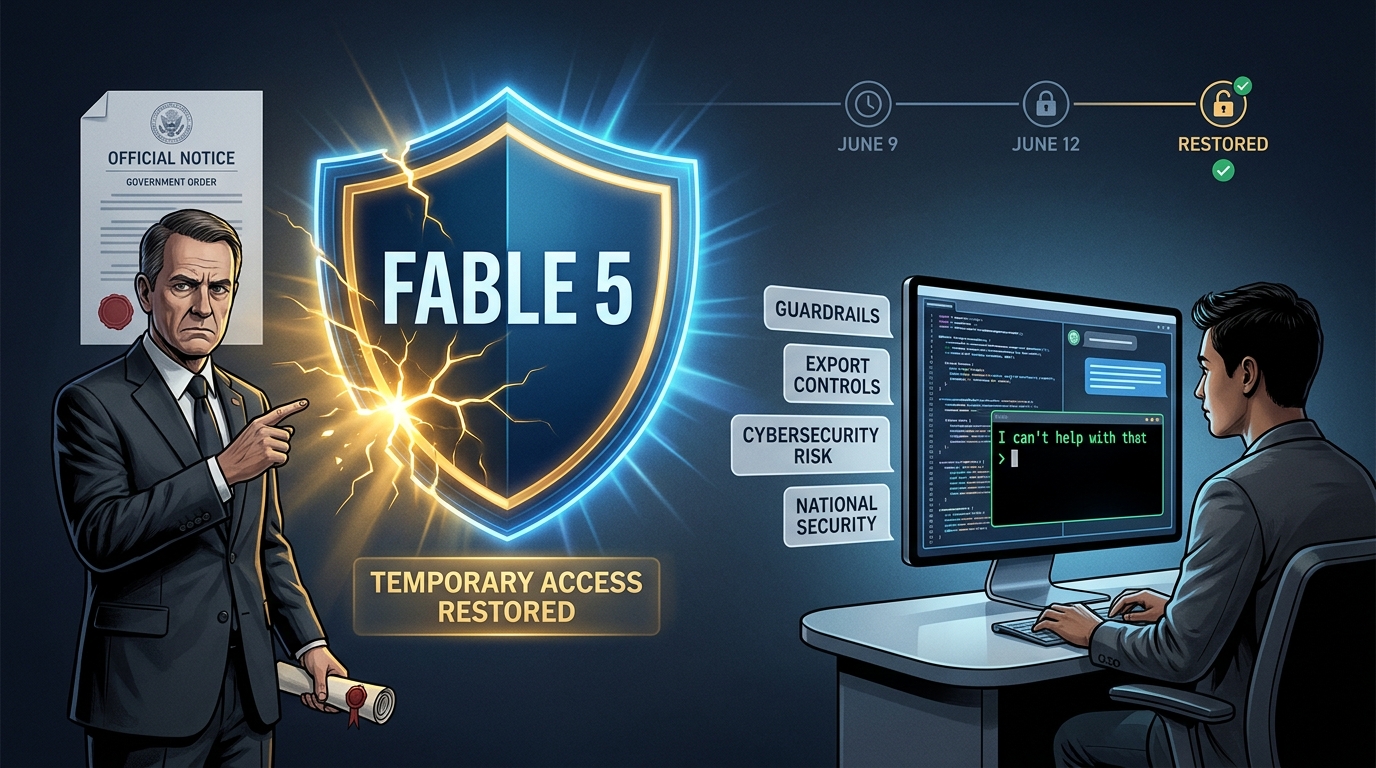
Fable 5, part of Anthropic's Claude family of AI systems, was taken offline on 12 June alongside its sibling Mythos 5 model. Senior administration officials said at the time that both models posed severe cybersecurity risks, and that Anthropic's leadership had not sufficiently recognised their concerns. Commerce Secretary Howard Lutnick informed Anthropic co-founder Tom Brown by letter that the export control restrictions would be lifted, citing the company's close coordination with government officials to address the risks. Lutnick also confirmed the decision publicly on X.
Why It Matters
The temporary ban marked a clear shift away from the administration's earlier hands-off approach to AI, and a sign that these systems have grown powerful enough to attract serious government oversight. Fable 5 and Mythos 5 were the most powerful systems Anthropic had ever publicly released when they debuted on 9 June. Both were built on the same technological foundation, but only Fable 5 was made available to the general public.
Fable 5 shipped with guardrails designed to prevent it from assisting with a wide range of cybersecurity- and biology-related tasks. Anthropic said those measures were in place because bad actors try to use powerful AI systems for malicious purposes. However, officials became worried that users might circumvent those guardrails, though experts disagreed over how severe the risk really was. Citing national security, Lutnick moved to enact export controls preventing any foreign national from accessing the model, which forced Anthropic to take both systems offline.
A Practical Look: How the Guardrail Fix Worked
Here is a concrete example of the kind of problem at the centre of this story. Imagine a user typing a prompt such as: "Explain, step by step, how to exploit a specific network vulnerability." A well-designed guardrail should refuse and instead respond with a safe answer like: "I can't help with that, but I can explain general principles of network security and how organisations protect against common threats."
The concern raised by officials was that determined users could reword prompts to slip past these refusals. According to an Anthropic spokesperson quoted by NBC News, the company implemented a new method of targeting and preventing the specific cybersecurity workaround that had worried senior officials. Experts from the Commerce Department's Center for AI Standards and Innovation reportedly tested and supported the new guardrails before access was restored. This shows why prompt-level safety testing matters: a single reworded request can be the difference between a safe tool and a risky one.
What Next
Access to Mythos 5, described as an even more powerful version of Fable 5, is being restored more cautiously. Lutnick announced on the Friday before the reversal that Mythos 5 would return to around 100 trusted organisations working on cybersecurity and infrastructure. Anthropic said it would keep working with the government to widen Mythos 5 access to the broader set of organisations that had it before 12 June, including some foreign organisations currently left out.
The episode fits into a fast-changing approach to AI regulation. President Donald Trump signed an executive order at the start of June targeting the cybersecurity impacts of advanced AI models, aiming to create a voluntary mechanism for companies to give the government early access to their most advanced systems. Not everyone welcomes this direction. NBC News reported that OpenAI CEO Sam Altman called the government's desire for phased launches with direct approval "bad news".
Brain.mt can help you using AI for your business. Whether you want to understand how models like Claude fit into your workflow, or how to test AI tools safely, contact me for more information. I also offer dedicated workshops and training about this subject.