Introduction: The Problem With Starting From Scratch Every Time
If you use Claude regularly for work, you'll recognise this situation: you open a new chat, and before you can get to the actual task, you spend several minutes re-explaining your context. Your company name, your preferred writing style, the format you want, the tone to avoid. Then the next day, you do it all again. And the day after that.
This is one of the most common frustrations people have with AI tools in a professional setting. The AI itself is capable — but the setup overhead adds up fast. Claude Skills are Anthropic's answer to this problem, and they represent a meaningful step forward in how teams can work with AI on a daily basis. This article explains what Skills are, how they work in practice, and why business and tech professionals should be paying attention.
What Are Claude Skills?
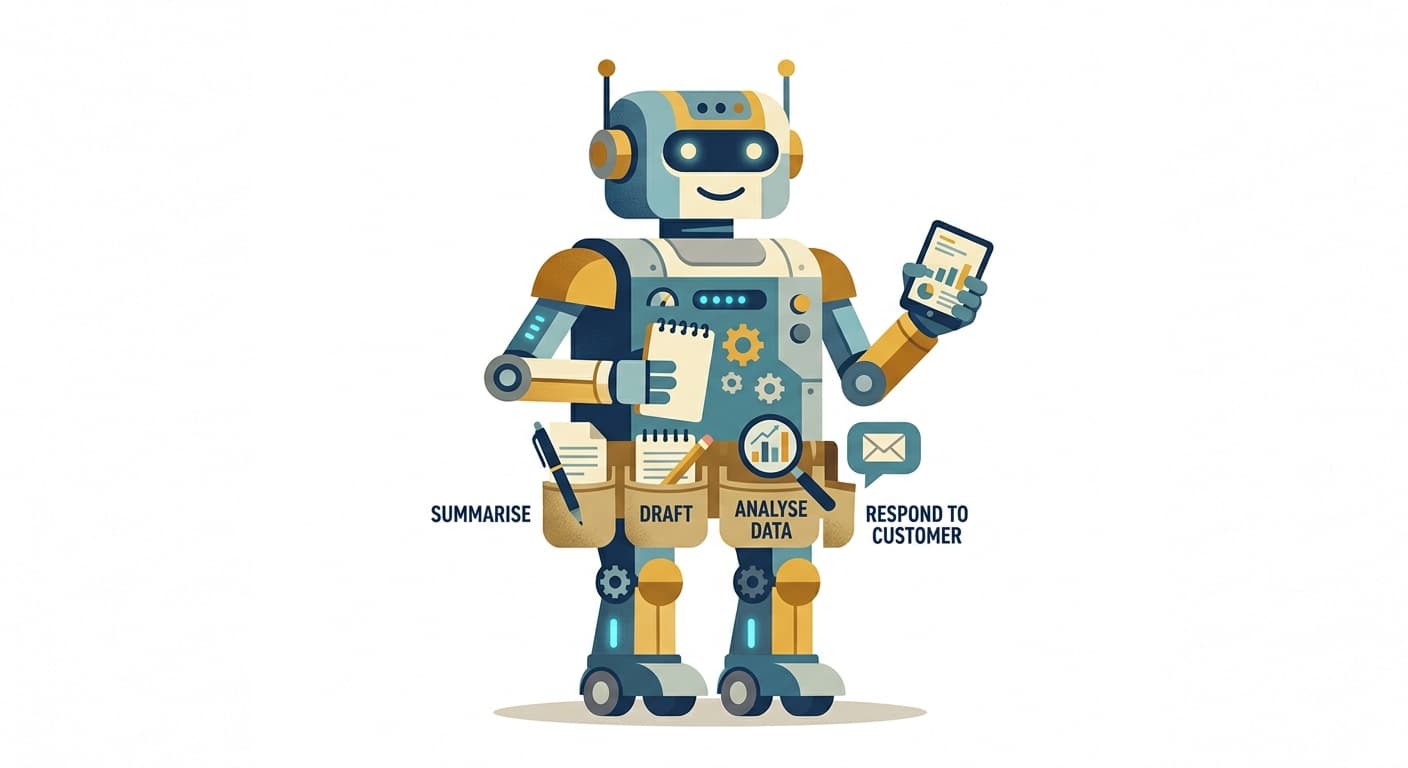
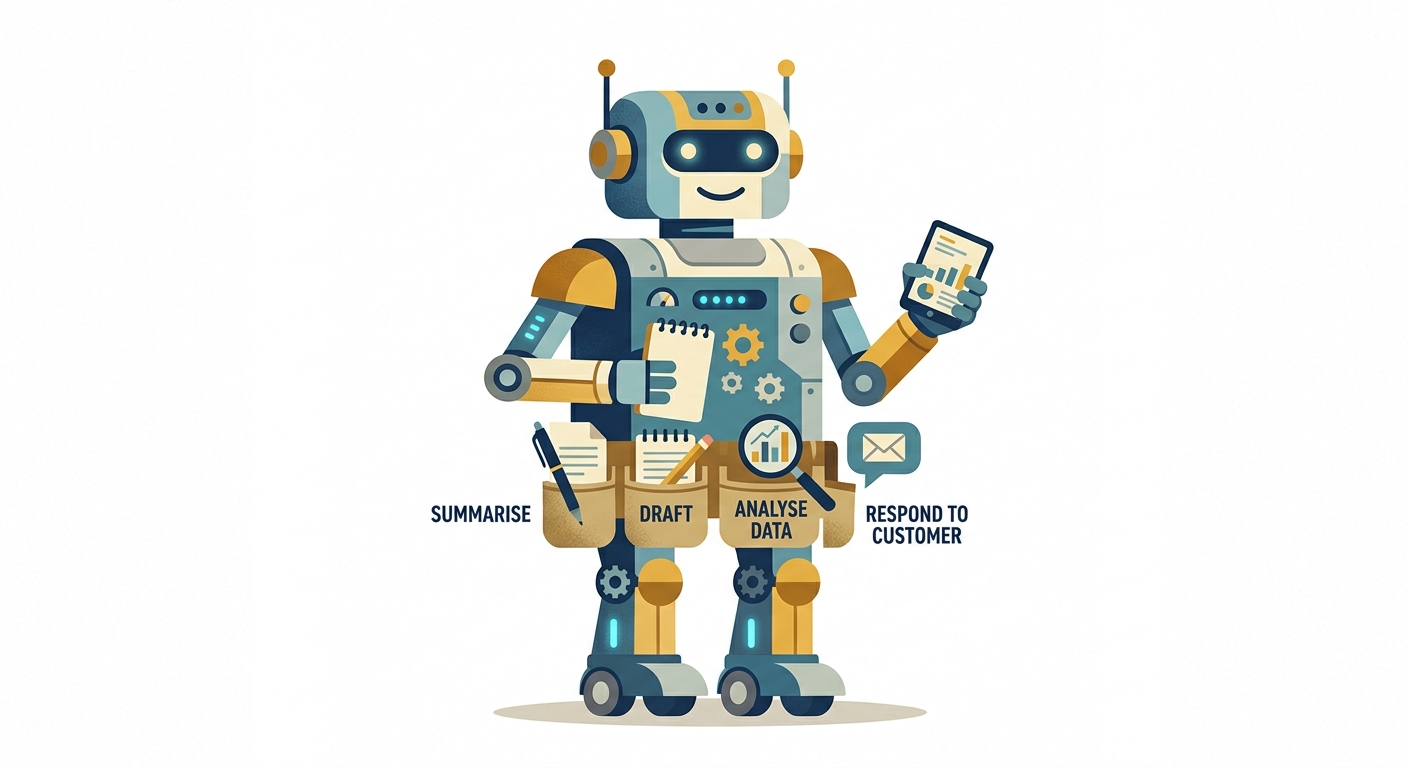
Claude Skills are reusable, task-specific instruction sets that you configure inside Claude. When a Skill is active, Claude follows those instructions automatically, without you needing to repeat them in every conversation. You define the behaviour once — the tone, the format, the context, the constraints — and Claude applies it consistently whenever that Skill is in use.
This feature sits within Claude's broader Projects functionality, which allows users to organise conversations and give Claude persistent context over time. Skills take this a step further by making specific behaviours repeatable and shareable across a team or organisation.
It's worth being clear about what Skills are not: they are not plugins, they are not external integrations, and they do not give Claude access to new capabilities. They are, essentially, very well-organised instruction sets that remove the need for repetitive prompting. Simple in concept, but genuinely useful in practice.
Why Consistency Matters More Than You Might Think
One of the quieter problems with AI adoption in teams is inconsistency. Two people on the same team ask Claude to do the same task — say, summarise a client meeting — and they get back two very different outputs. One is a bullet-point list, the other is a flowing paragraph. One mentions action items, the other doesn't. Neither is wrong, but neither is reliably useful either.
When you're scaling AI use across a team, inconsistency becomes a real operational issue. It means outputs need more human review, more editing, and more back-and-forth. The time savings you expected from using AI start to shrink.
Claude Skills address this directly. When a Skill defines the expected output format, the required sections, and the appropriate level of detail, every team member gets roughly the same quality of result. This is particularly valuable in:
- Customer-facing communications — where tone and accuracy matter
- Internal reporting — where format consistency speeds up review
- Content production — where brand voice needs to stay coherent
- Technical documentation — where structure and completeness are non-negotiable
A Real-Life Example: The Marketing Team Use Case
Let's make this concrete. Suppose you manage a marketing team of five people. You all use Claude to help draft blog posts, social media content, and email newsletters. Currently, each person has their own way of prompting Claude — some are detailed, some are vague — and the results vary considerably.
With Claude Skills, you create a single Skill called "Content Drafting Assistant". Inside this Skill, you include the following instructions:
- Always write in British English
- Use a professional but approachable tone — no corporate jargon
- Structure blog posts with an introduction, three to four main sections with H2 headings, and a conclusion
- Keep sentences under 25 words where possible
- Include a suggested meta description of 150 characters at the end
- Do not use the words "leverage", "synergy", or "paradigm"
Now every team member activates this Skill before drafting content. The result? Consistent outputs that already meet your editorial standards, requiring far less editing time. A task that previously took 45 minutes of back-and-forth prompting now takes 15. Multiply that across five people and a full week of content work, and the time savings become significant.
This is not a hypothetical benefit — it is the kind of practical gain that teams using structured AI workflows report regularly.
How Claude Skills Fit Into a Broader AI Strategy
It would be easy to look at Skills as a minor convenience feature. But they represent something more considered: a move towards making AI behaviour governable at an organisational level.
For businesses thinking carefully about how they adopt AI, governance is a real concern. Who controls how the AI is being used? How do you ensure outputs meet quality standards? How do you train new team members to use AI tools correctly? Skills provide a practical mechanism for answering these questions.
A team lead or AI coordinator can build and maintain a library of Skills that encode the organisation's standards. New staff members don't need to learn prompt engineering — they just activate the relevant Skill and get to work. This lowers the barrier to entry and makes AI adoption more inclusive across different levels of technical ability.
It also means that as your understanding of what works improves, you can update a Skill once and everyone benefits immediately. There's no need to chase down individuals and ask them to update their personal prompts.
Getting Started: Practical Steps
If you're ready to try Claude Skills, here's a straightforward way to begin:
- Identify your most repeated tasks. What do you ask Claude to do at least three times a week? Start there.
- Write down the ideal output. What does a perfect response look like for that task? Note the format, tone, length, and any specific requirements.
- Create your first Skill. Inside Claude, set up a Project and add your instructions as persistent context or a named Skill configuration.
- Test it with real tasks. Run five or six actual work tasks through the Skill and note where the output still needs adjustment.
- Refine and share. Once you're happy with the results, share the Skill with your team and gather feedback.
You don't need to build a perfect Skill on the first attempt. Treat it as a working document that improves over time as you learn more about how Claude responds to different instructions.
Conclusion: Practical AI That Works for Your Team
Claude Skills are not a flashy feature. They won't make headlines the way a new AI model release does. But for anyone who uses Claude regularly for professional work, they represent a genuinely useful improvement to how AI fits into daily workflows. They reduce repetitive setup, improve output consistency, and make it easier for entire teams — not just technically confident individuals — to get reliable results from AI.
If you're serious about making AI work for your organisation rather than just experimenting with it, Skills are a good place to focus your attention.
At Brain.mt, we help businesses make practical use of AI tools like Claude — from setting up workflows and Skills to building a coherent AI strategy for your team. If you'd like to explore how this could work for your organisation, get in touch for a conversation. We also run dedicated workshops and training sessions on AI tools and workflows, designed for both technical and non-technical professionals. Contact us at Brain.mt to find out more.