What happened
On 28 July 2026, Google DeepMind announced a set of new capabilities for Managed Agents in the Gemini API. According to the announcement by Philipp Schmid and Mariano Cocirio, the update introduces environment hooks, model selection and free tier access, building on an earlier release that added background tasks and remote MCP server integration.
With managed agents in the Gemini Interactions API, Google says a single API call can coordinate reasoning, code execution, package installation, file management and web retrieval inside an isolated cloud sandbox. The antigravity-preview-05-2026 agent now runs Gemini 3.6 Flash by default, described as a balanced model for reasoning, coding and tool use. No code changes are required — the next interaction picks it up automatically.
Why it matters for smaller teams
Three additions stand out for developers and businesses working with limited resources. First, managed agents are now available on free tier projects, so you can experiment using an API key from a project without active billing. Second, because agents run multi-turn autonomous loops that can consume significant token budgets, you can now pass max_total_tokens inside agent_config to cap total consumption of input, output and thinking. When the agent reaches the limit, execution safely pauses and the interaction returns status: "incomplete", with environment state preserved so you can continue later.
Third, scheduled execution with triggers binds an agent, environment, prompt and cron schedule into a persistent resource that fires without manual intervention. Each run reuses the same sandbox, so files persist across runs. Together these turn agents into cost-controlled, scheduled workers that operate without external orchestration.
A real example: hooks in action
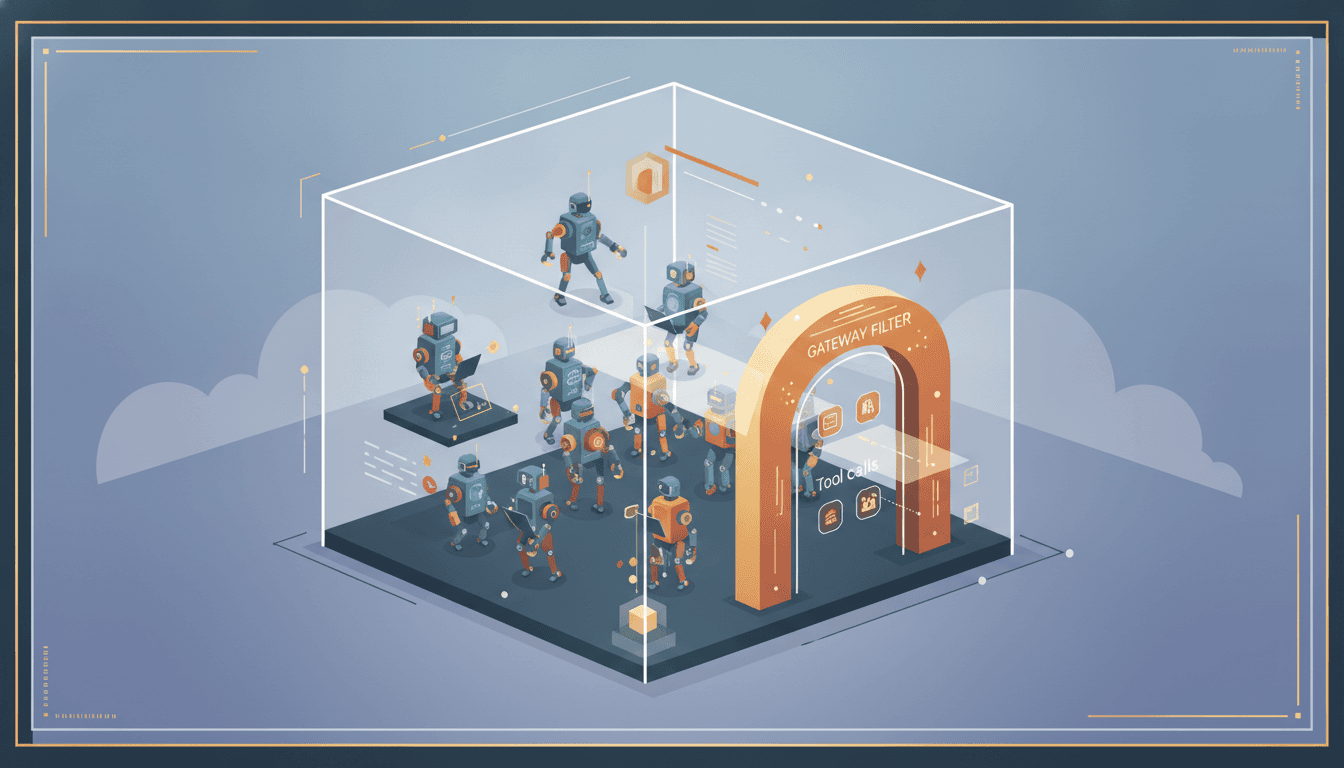
Environment hooks let you run custom scripts before or after every tool call an agent makes inside its sandbox. You add a .agents/hooks.json file, and the runtime executes handlers on pre_tool_execution or post_tool_execution events. The matcher field supports regular expressions — use | to target multiple tools or * to catch everything.
In Google's example, a security-gate group runs gate.py before every code_execution or write_file call. If the script returns {"decision": "deny", "reason": "..."}, the tool call is skipped and the reason is passed back into the model's context. A separate auto-format group runs a linter after each tool finishes.
Alston Lin, Founder & CTO of OffDeal, an AI-native investment bank, explained how his team uses post_tool_execution hooks: "Before agent hooks, we couldn't do this on Gemini's managed agents: the sandbox is remote, so our validation code had nowhere to run." Now a hook triggers a pipeline that fetches company logos, enforces pixel-level quality checks and verifies each logo with Gemini vision before approving files for a client deck.
What next
Developers can add the Interactions API skill to a coding assistant with npx skills add google-gemini/gemini-skills --skill gemini-interactions-api, and install the SDK with npm install @google/genai. Google also points to an Environments API for listing, inspecting and deleting sandbox sessions, useful for recovering environment IDs after a disconnect or cleaning up before the 7-day TTL expires.
At Brain.mt we can help you put tools like this to work for your business, whether that means designing agent workflows, adding safety checks or controlling costs. Contact me for more information. I also offer dedicated workshops and training about this subject.